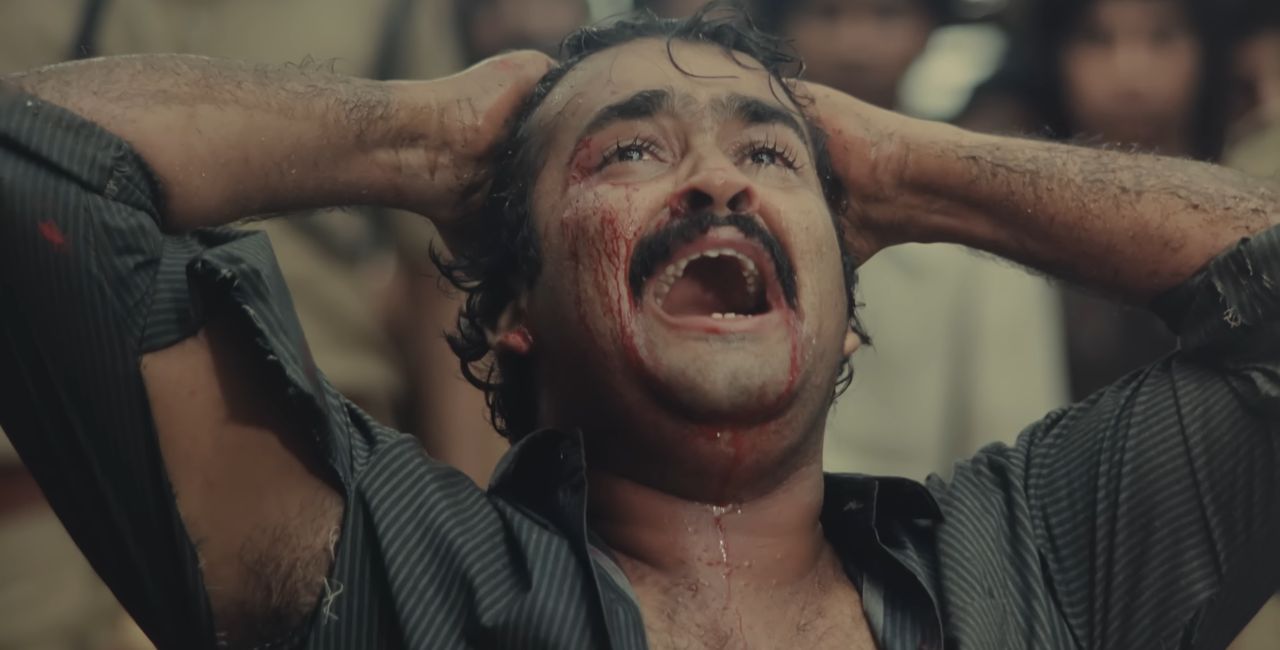

We watched the new remaster of Kireedam (Crown), arguably one of the best movies from the 1985-95 era of trailblazing filmmakers. It hit theaters in 1989, and I first watched it about 10 years ago. The remaster has better English subtitles, and the story transcends linguistic and geographic boundaries. I’m sure it has a permanent place on those “Malayalam cinema to watch” lists.
Sethu, played by Mohanlal, is a young man who seems to have everything figured out in life. He is in line to become a Sub-Inspector of Police and fulfill his father’s dream (played by Thilakan), as one would expect of a twentysomething in Kerala (even today, but I digress). He plans to marry the love of his life, and, unlike in films of the time, their families support their decision (you would wish this were the “tragedy”). While Sethu is unironically living the dream, fate has other plans. What follows is a tragedy that’s hard to watch (my wife wanted to leave after the interval). The movie ends with Sethu, having lost everything, murdering a goon in the middle of the market with his once proud father in the audience. We leave wondering if such a fate could follow us even when we do everything right.
The titular Kireedam, or the Crown, symbolizes the weight of responsibility put on Sethu as the eldest son to carry out his father’s wishes and also the weight of incorrect expectations thrust on him by society for standing up to the goons. All of this comes crashing down on the young man in the final act, portrayed brilliantly by Mohanlal.
Objectively, Mohanlal is one of the greatest actors in the history of cinema, and as I watch his older works (which are also objectively considered his best), I always try to figure out what makes him great—one of which is his ability to play a mix of emotions and transition between them flawlessly. In the final act, after murdering the goon with a knife in a fit of rage and frustration and overwhelming emotions, Sethu snaps out of it when he hears his father asking him to drop the knife. In that moment, the weight of what he had done hit Sethu, and you see him go from a confused state to realizing he is a murderer, to realizing there is no going back, and he has lost everything. I can’t comprehend how you portray that as an actor, but Mohanlal at 29 seems to do it effortlessly.
I finished reading The Death of Ivan Ilyich yesterday, and it has a similar tone. Sethu was on the verge of living the ideal life. We begin to root for him, unaware of what follows. When the Sub-Inspector, played by Murali, gives him hope and assures him that the full weight of the Police Force would be at his disposal when he gets his appointment to solve the mess he unwillingly found himself in, we also hope he somehow gets a happy ending. After all, all movies have happy endings, right?
While Tolstoy’s Ivan agonizes on his deathbed over how he lived a prescribed life, Sethu loses his chance even at that. The pain of having a life full of possibilities and not living any of it at all, and the pain of having had it all, only to have it taken away just as quickly, create equally broken men.