

You can skip to the template here.
People can’t use what they don’t understand.
For open source projects, good documentation is as important as the project itself.
This is a guide to create useful READMEs that is best suited for small open source projects without dedicated websites having extensive documentation.
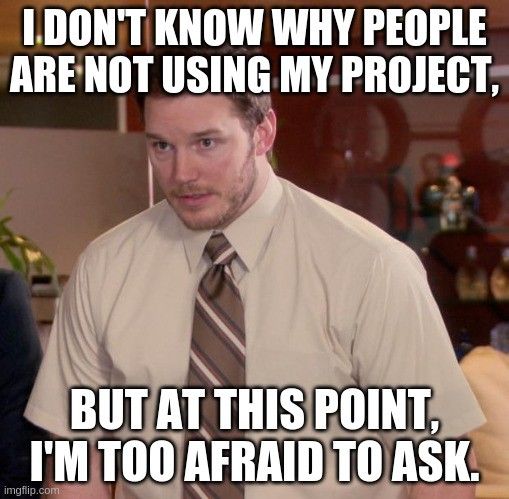
Photo from imgflip
You can use this guide as a reference and build on top of it for your projects.
A Useful README
A README file is the first thing a user will see in your project. First impressions last, so it is important to make a good README.
A good README also helps:
- your project cut through the noise and stand out
- your users understand how to use the project
- your contributors contribute to the project
There is not a one-size-fits-all when it comes to usability. But having the following sections can help:
- Title and description: Name of your project and an introduction to what it is about.
- Quickstart/Demo: A short introduction that users can follow to get started quickly with your project.
- Installation: A guide on how users can install your project.
- Usage: Details on how to use the project.
- Development: How users can build a development version of the project on their machines.
- Contribute: Guide for open source contributors looking to contribute to the project.
Considering all these, I have created a reusable template you can fork on GitHub.
Depending on your project, you might have very different README files. The idea is to use this as a reference as you write your README.

Photo from imgflip